
Views: 0 Author: Site Editor Publish Time: 2026-06-29 Origin: Site


Engineers face a constant metallurgical challenge in every manufacturing project. They must balance mechanical strength against structural manufacturability. Finding this perfect equilibrium prevents catastrophic field failures. It also keeps your production cycles moving efficiently without severe tooling breakdowns.
Altering the carbon content in steel is the most direct method to manipulate material properties. However, this approach introduces strict engineering trade-offs. You gain surface hardness and structural rigidity. But you inevitably sacrifice flexibility, ductility, and ease of machining.
We will explore how to align specific carbon grades with your operational requirements. You will learn to navigate these material compromises effectively. This guide outlines classification frameworks, fabrication limits, and the essential role of thermal processing.
The Core Trade-off: Increasing carbon content elevates hardness and tensile strength but proportionally reduces ductility, weldability, and machinability.
Categorization Drives Sourcing: Carbon steel is broadly divided into low, medium, and high grades, each dictating distinct manufacturing processes and applications.
The Medium Carbon Sweet Spot: Grades like Medium Carbon Steel SAE1045 offer an optimal baseline for engineered components requiring both strength and reasonable workability.
Post-Processing is Essential: Achieving peak performance metrics without inducing brittleness requires precise, application-specific thermal processing.
Understanding steel performance requires recognizing an unyielding inverse relationship. As hardness increases, workability decreases. Carbon atoms occupy interstitial spaces within the iron lattice. They physically block dislocation movements. This makes the metal significantly stronger. However, it also prevents the material from bending or stretching.
Tensile strength and wear resistance climb linearly as carbon percentages rise. This creates incredibly resilient surfaces. High-carbon components endure heavy friction without galling. But this strength introduces a distinct threshold. Beyond a certain point, the matrix becomes brittle. High hardness rapidly degrades cutting tools. Machinability plummets, causing severe manufacturing bottlenecks.
You must also evaluate the critical weldability factor. High carbon content acts as a major fabrication risk. Rapid cooling during welding transforms the heat-affected zone (HAZ) into brittle martensite. This structure is highly susceptible to cold cracking. You cannot weld these grades using standard procedures. We must implement precise pre-heating protocols. Post-weld stress relief becomes absolutely non-negotiable to prevent immediate structural failure.
Common Mistake: Failing to pre-heat high-carbon joints often causes invisible micro-fissures. These internal cracks propagate under dynamic loads, leading to sudden component snapping.
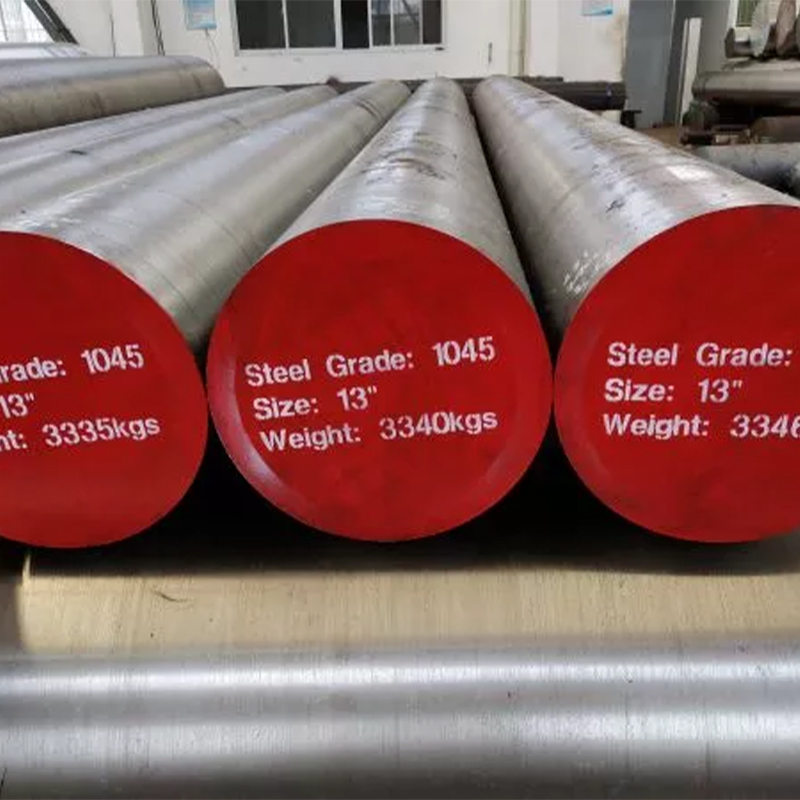
Industry standards break Carbon Steel into distinct percentage brackets. Each category offers a specific commercial viability. Engineers must match these structural realities to precise application specs.
Low carbon steel, often called mild steel, contains less than 0.30% carbon. It delivers exceptional formability and excellent weldability. You rarely need thermal management before welding it. Manufacturers rely on mild steel for structural I-beams, automotive body panels, and extensive pipeline networks.
Medium carbon steel occupies the 0.30% to 0.60% range. It serves as the ultimate structural workhorse. This bracket provides a robust balance. You get high fatigue resistance without entirely losing machinability. Medium Carbon Steel SAE1045 stands out as the definitive industry standard here. Engineers heavily specify SAE1045 for transmission axles, forged gears, and rotational shafts.
High carbon steel spans from 0.60% to 1.50%. It offers extreme wear resistance but suffers from critically low ductility. You cannot easily bend or weld these grades. They remain strictly restricted to specialty applications. Typical uses include industrial cutting tools, heavy-duty springs, and high-wear stamping dies.
Classification | Carbon Range | Primary Strength | Key Limitation | Typical Applications |
|---|---|---|---|---|
Low Carbon (Mild) | < 0.30% | High formability, excellent weldability | Low tensile strength, poor wear resistance | Auto panels, structural shapes, wire |
Medium Carbon | 0.30% – 0.60% | Balanced strength and toughness | Requires pre-heating for safe welding | Axles, gears, SAE1045 forged parts |
High Carbon | 0.60% – 1.50% | Extreme surface hardness | Highly brittle, very difficult to machine | Cutting tools, springs, high-wear dies |
Raw mill steel rarely meets final engineering tolerances immediately. It almost always requires secondary processing. We use thermal manipulation to unlock the full potential of any chosen grade. Without it, the metal remains either too soft for field use or too brittle for safe operation.
Quenching and tempering represent the most critical thermal cycles. Quenching rapidly cools the hot metal. This sudden drop locks in a hard martensitic structure. The surface becomes highly resistant to abrasion. We then temper the part by slightly reheating it. Tempering relieves internal stresses. It retains the hard exterior while restoring a tough, ductile core.
Annealing and normalizing serve a different purpose. They completely reset the microstructure. Annealing softens the metal thoroughly. Normalizing refines the grain size. Both processes ensure consistent machinability before CNC operators begin their heavy milling cycles.
Partnering with a specialized custom steel heat treatment service mitigates profound manufacturing risks. Experienced metallurgists prevent uneven cooling distortion. They eliminate internal micro-cracking during rapid quenches. Furthermore, professional vendors guarantee strict compliance with rigorous ASTM and ISO material standards.
Heat Treatment Features-to-Outcomes Chart | ||
Thermal Process | Mechanism (Feature) | Engineering Outcome |
|---|---|---|
Quenching | Rapid cooling from austenitic phase | Maximum surface hardness (Martensite) |
Tempering | Controlled reheating post-quench | Stress relief, restored core ductility |
Annealing | Slow furnace cooling | Maximum softness, optimal machinability |
Normalizing | Air cooling from elevated temps | Uniform grain structure, dimensional stability |
Selecting the correct material requires looking past raw strength metrics. You must evaluate the holistic manufacturing environment. Engineers frequently encounter hidden operational risks when they specify overly hard materials.
Consider the realities of heavy machining. Higher carbon grades significantly increase tooling degradation. CNC spindle speeds must drop. Cycle times inherently slow down. You must account for frequent insert changes and extended production schedules. Pushing cutting tools too hard against tough alloys leads to catastrophic insert shattering.
Environmental vulnerability presents another massive consideration. Many engineers mistakenly believe harder steel resists rust better. This is completely false. Increasing carbon does not improve corrosion resistance. It offers zero protection against oxidation. You must define clear assumptions around required protective coatings. If the operational environment involves moisture or chemicals, you will need alloying necessities like chromium or nickel instead.
Supply chain consistency acts as your final hurdle. You must routinely verify mill test reports (MTRs). Carbon variance must stay rigidly within specified tolerances.
Tooling Wear: Harder grades demand specialized carbide inserts and rigid machine setups.
Oxidation Risks: Carbon inherently rusts; mandate plating, galvanizing, or oiling.
Tolerance Drift: A mere 0.05% shift in carbon content can entirely ruin a complex heat-treatment cycle.
Welding Delays: Mandatory pre-heating adds hours to fabrication timelines.
Choosing the ideal material requires a structured framework. Procurement and engineering teams must collaborate closely. Do not rely on guesswork. Follow a systematic approach to eliminate downstream failures.
Define Operational Stress: Map out the maximum dynamic loads. Analyze the expected wear environment. Determine exactly how much surface friction the component will face daily.
Audit Fabrication Capabilities: Honestly assess your internal shop floor. Can your facility actually handle high-carbon welding protocols? Do you have the necessary pre-heating ovens and thermal blankets?
Run an Efficiency Analysis: Compare the extensive processing time required to case-harden raw low-carbon metal against the direct application of medium or high-carbon grades. Evaluate the total engineering effort required for each path.
Consult Metallurgical Partners: Never skip pilot testing. Work directly with heat treatment specialists. Create prototypes and subject them to destructive testing before scaling up production runs.
Best Practice: Always test a small batch of your chosen grade through the exact intended thermal cycle. Verify core hardness and dimensional stability before committing to a massive production order.
Specifying the optimal material is never about finding the absolute strongest option. It is about selecting the most application-appropriate material. Balancing strength, ductility, and machinability ensures long-term component reliability.
You must leverage the synergy between accurate grade selection and controlled heat treatment. Choosing a proven baseline like SAE1045 provides excellent versatility. However, applying expert thermal management truly unlocks its structural potential.
We encourage you to take the next technical step. Submit your component blueprints or technical requirements to our metallurgical team. We will review your load specifications and provide precise heat treatment recommendations tailored to your unique production environment.
A: Higher carbon content slightly lowers the melting point of the alloy. Pure iron melts at roughly 1538°C. Adding carbon depresses this temperature. This metallurgical shift directly impacts casting processes. It also defines the absolute maximum high-temperature operational thresholds for the finished components.
A: SAE1045 delivers a highly predictable response to heat treatment. It achieves the exact yield strength necessary for heavy rotational parts like axles and crankshafts. Crucially, it provides this durability without the extreme brittleness found in high-carbon alternatives, making it remarkably reliable.
A: No. Welding without proper thermal management invites rapid cooling. This triggers instant martensite formation in the heat-affected zone. The resulting microstructure becomes intensely brittle. It almost always leads to immediate structural failure through cold cracking.
A: No. This is a very common engineering misconception. Carbon strictly dictates mechanical properties like hardness and tensile strength. It offers zero defense against oxidation. To achieve actual corrosion resistance, you must introduce specific alloying elements like chromium and nickel.


