
Views: 0 Author: Site Editor Publish Time: 2026-08-19 Origin: Site


Sourcing cold-finished steel is a high-stakes procurement decision. Inconsistencies in surface finish or dimensional tolerances directly inflate machining time, tool wear, and scrap rates. Procurement managers and engineers frequently face a disconnect between a supplier’s marketed capabilities and the actual delivered quality of bright steel. General metal sourcing strategies fail to address the specific metallurgical and dimensional requirements of precision manufacturing. To protect production margins and ensure consistent material performance, buyers must move beyond basic weight-based comparisons. This guide provides a rigorous, technical framework for auditing and selecting a reliable bright steel supplier based on quality control, processing capabilities, and supply chain resilience.
Variations in bright steel directly impact CNC machining efficiency, tool degradation, and final product viability. When bar stock exhibits inconsistent hardness or internal inclusions, cutting tools wear out prematurely. This forces operators to slow down feed rates or replace carbide inserts more frequently. Poor surface conditions, such as residual scale or decarburization, cause unpredictable chip formation. These metallurgical inconsistencies disrupt automated machining cycles and lead to costly machine downtime. A reliable material feed is mandatory for lights-out manufacturing environments where operators are not present to clear bird-nested chips.
Establishing baseline requirements for precision bright steel ensures predictable production runs. Exact dimensional tolerances allow bar feeders to grip and advance the material without jamming. Superior surface finish, completely free of seams or micro-cracks, eliminates the need for secondary grinding operations on the finished component. Consistent machinability across different batches means programmers do not have to rewrite tool paths or adjust spindle speeds for every new delivery. You need material that behaves predictably from the first part to the ten-thousandth.
The hidden costs of cheap steel far outweigh the initial savings on raw material. Substandard bars increase machine downtime, elevate rejection rates, and consume more cutting fluid. Operators spend valuable hours troubleshooting chatter marks or dimensional drift caused by internal material stress. When cold-drawn steel is not properly stress-relieved at the mill, the material will physically bow or warp as soon as the outer layer is machined away. Sourcing from a premium supplier prevents these shop-floor disasters. High-quality steel extends tool life, accelerates cycle times, and drastically reduces the volume of scrap metal leaving your facility.
Adherence to strict tolerance classes guarantees proper integration into automated feeding systems and Swiss-style lathes. Standard tolerance grades like h9, h10, and h11 dictate the allowable deviation in bar diameter. When a supplier consistently hits these tight windows, collets grip the material securely without excessive runout. This precision prevents vibration during high-speed turning operations. If bars are out of round or oversized by even a few thousandths of an inch, they will seize in the guide bushings of a Swiss machine, halting production entirely and potentially damaging the equipment.
Surface integrity is equally important for finished components. Acceptable parameters for surface roughness (Ra) must be clearly defined in your purchasing specifications. You must ensure the complete absence of surface defects like laps, pits, or drawing tears. Different manufacturing methods yield different finishes. Cold drawn bars offer a smooth, work-hardened surface suitable for most general machining. Turned and polished bars remove the decarburized layer, providing a defect-free surface for demanding applications. Centerless ground bars deliver the ultimate precision in both roundness and surface finish.
Bright Steel Surface Finish and Tolerance Comparison
| Manufacturing Process | Typical ISO Tolerance | Surface Roughness (Ra) | Primary Shop Floor Application |
|---|---|---|---|
| Cold Drawn | h10 - h11 | 1.6 - 3.2 µm | General CNC turning, fasteners, non-critical shafts |
| Turned & Polished | h9 - h10 | 0.8 - 1.6 µm | Hydraulic cylinder rods, defect-free requirements |
| Centerless Ground | h8 - h9 | 0.4 - 0.8 µm | Swiss machining, precision bearings, tight-fit dowels |
A valid Mill Test Report (MTR) is the foundation of material compliance and verification. It must clearly list the exact chemical analysis of the heat, confirming the percentages of carbon, manganese, sulfur, phosphorus, and alloying elements. The MTR must also document mechanical properties, including tensile strength, yield point, elongation, and hardness values. Procurement teams should reject any shipment arriving without this documentation. This paperwork proves the steel meets the specific ASTM, EN, or JIS standards required by your engineering drawings.
End-to-end traceability from the steel mill to the final delivered bar is non-negotiable for aerospace, automotive, and medical applications. Heat lot tracking ensures that if a field failure occurs, the exact batch of raw material can be isolated and analyzed. This traceability protects your company from massive liability and targeted recalls. Suppliers must maintain digital records linking every cut piece back to its original master coil or billet. If a vendor cannot produce an MTR within minutes of a request, they lack the necessary inventory control systems.
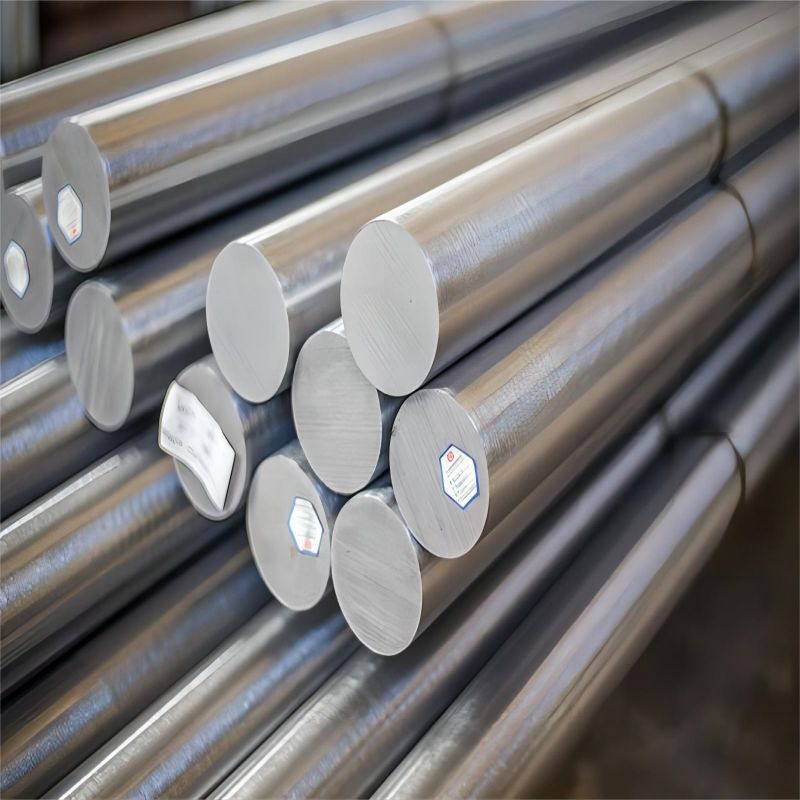
Necessary in-house testing capabilities separate top-tier suppliers from basic metal brokers. Rigorous bright steel quality control relies heavily on non-destructive testing (NDT) to identify hidden flaws before the material ships. Ultrasonic testing (UT) sends high-frequency sound waves through the bar to detect internal voids or piping left over from the ingot casting process. Eddy current testing (ECT) scans the outer circumference for microscopic surface cracks and seams. Magnetic particle inspection (MPI) is also utilized for identifying surface and near-surface discontinuities in ferromagnetic materials. These methodologies ensure defective bars never reach your shop floor.
Certifications act as baseline indicators of a supplier's commitment to quality management. ISO 9001 certification demonstrates a standardized approach to process control and continuous improvement. For automotive supply chains, IATF 16949 is mandatory, emphasizing defect prevention and the reduction of variation. Aerospace manufacturers require AS9100 compliance, which adds stringent requirements for risk management and counterfeit parts prevention. Always verify that these certificates are current and issued by accredited auditing bodies, rather than just taking the supplier's word for it.
Buyers must request case studies or references specifically from precision manufacturing sectors to verify a supplier's track record. A vendor might excel at supplying structural I-beams but fail miserably at delivering cold-finished bars for Swiss lathes. Speak directly with their current customers about delivery reliability, material consistency, and how they handle non-conformance reports. Real-world feedback provides insights that marketing brochures cannot. Ask references specifically about how the supplier handles claims for out-of-tolerance material.
Assessing the supplier's financial stability ensures they have the capital to maintain deep inventory levels. Financially healthy suppliers can survive market downturns without compromising material quality or laying off critical quality control personnel. They can afford to invest in modern processing equipment and secure large block purchases from steel mills. A financially unstable supplier poses a severe risk of sudden supply chain disruption, leaving your machines sitting idle while you scramble to find alternative raw material sources.
Evaluating a supplier's ability to perform secondary operations adds significant value to your procurement strategy. Robust bright steel processing includes precision cutting to exact lengths, chamfering bar ends, facing, and deburring. Chamfered ends are particularly critical for automated bar feeders. A proper 30-degree or 45-degree chamfer allows the material to slide smoothly into the collet without damaging the machine. If bars arrive with rough, saw-cut edges, your operators will waste hours manually grinding the ends before loading the magazines.
Utilizing a single source for raw material and secondary processing simplifies procurement and reduces administrative overhead. Vendor consolidation means fewer purchase orders to track, fewer invoices to process, and a streamlined inbound logistics flow. More importantly, it creates a single point of accountability. If a pre-cut bar is out of tolerance, there is no finger-pointing between the steel mill and the third-party cutting house. The supplier owns the entire problem and must provide the resolution.
Receiving pre-processed materials reduces the buyer's internal labor costs and accelerates the manufacturing cycle. Your highly skilled machinists should focus on complex turning and milling operations, not operating a horizontal bandsaw. Outsourcing these initial preparation steps to the supplier increases your overall factory throughput. It also frees up valuable floor space that would otherwise be occupied by raw material prep equipment and scrap bins.
Assess the supplier's capacity to deliver non-standard shapes and custom lengths tailored to specific production runs. While round bars are standard, many applications require hexagons, squares, or flat profiles. Sourcing custom bright steel profiles that closely match the final part geometry drastically reduces machining time and material waste. For example, starting with a cold-drawn hex bar for a custom nut or fitting eliminates the need to mill the flats, saving minutes of cycle time per part.
Evaluate the availability of metallurgical consulting to assist in selecting the optimal grade and finish. Expert suppliers employ metallurgists who can recommend alternative alloys that offer better machinability or higher yield strength for your specific application. They can advise on the exact heat treatment, such as annealing or normalizing, needed to achieve the desired mechanical properties. This engineering support is invaluable during the prototyping and product development phases, ensuring you do not over-specify and overpay for material grades you do not actually need.
A reliable bright steel bar supplier must maintain deep inventory of standard grades to buffer against global supply chain disruptions. Grades like 1018, 1045, 4140, and 12L14 are industry staples; stockouts on these items are unacceptable. Deep inventory ensures that sudden spikes in your production demand can be met without waiting for a new mill rolling cycle, which can take up to 16 weeks. Ask potential suppliers about their inventory turnover rates and their safety stock policies for your specific high-volume items.
Emphasize the necessity of asking not just if material is in stock, but where it is physically located. Geographic proximity directly impacts freight costs and true lead times. A supplier might boast massive inventory, but if it sits in a warehouse three time zones away, transit delays and weather disruptions will plague your operations. Localized distribution centers provide the agility needed for rapid response and emergency next-day deliveries.
Evaluate the supplier's capability to execute reliable JIT delivery programs. JIT systems reduce the buyer's warehousing costs and inventory carrying risks. Instead of holding three months of steel on your floor, the supplier delivers exactly what you need for the week's production schedule. This requires tight logistical integration, accurate forecasting, and a supplier with an impeccable on-time delivery record. A failed JIT delivery means idle spindles and missed customer deadlines.
Purchasing strictly by weight rather than by the "each" or "per foot" ensures accurate cost tracking. Transparent pricing models prevent hidden markups and allow for direct comparisons between different vendors. When you buy by weight, you pay exactly for the mass of steel you receive. You must also account for processing premiums separately. Clear itemization of material costs versus cutting or chamfering fees provides total visibility into your procurement spend and helps identify areas for cost reduction.
Evaluate if the supplier provides proactive insights into macroeconomic trends, alloy surcharges, and tariff impacts. The steel market is highly volatile, influenced by global scrap availability, energy costs, and geopolitical events. A strategic supplier acts as a market intelligence partner, advising you on when to lock in bulk purchases before anticipated market shifts. They should provide regular updates on scrap surcharges and manganese or chromium adders so you can adjust your own customer quotes accordingly.
Top-tier suppliers offer pricing stability mechanisms to protect buyers from raw material market fluctuations. Forward contracts allow you to lock in a specific rate for a set volume of steel over six to twelve months. Index-linked pricing ties your costs to a recognized public index, ensuring you pay a fair market rate without constant renegotiation. These risk mitigation strategies provide predictability for your annual budgeting process and protect your profit margins on long-term manufacturing contracts.
Dealing directly with the mill or primary bright steel manufacturer is optimal for massive volume requirements. If you consume truckloads of a single specific grade and size every month, bypassing the middleman yields significant cost efficiencies. Direct sourcing is also necessary for highly specialized custom runs where you dictate the exact chemistry and drawing reduction parameters. Mills have the heavy equipment required to produce bespoke metallurgical profiles and handle massive tonnage.
Direct communication with metallurgists and production managers is a major benefit of mill-direct sourcing. When technical issues arise, you speak directly with the engineers controlling the drawing dies and annealing furnaces. This direct accountability accelerates problem resolution and ensures your feedback immediately influences the manufacturing process. However, mills typically require massive minimum order quantities and extended lead times, making them unsuitable for short-run production.
Using a distributor or specialized service center offers distinct advantages for mixed-grade orders and smaller Minimum Order Quantities (MOQs). Service centers aggregate demand from hundreds of customers, allowing them to buy in bulk from the mills and sell in smaller lots to you. This agility is perfect for job shops or manufacturers with high-mix, low-volume production schedules. They provide rapid turnaround times, often delivering material within 24 to 48 hours from local floor stock.
Service centers excel in localized logistics and bespoke inventory management programs. They offer value-added services like custom kitting, vendor-managed inventory (VMI), and specialized packaging. By acting as a buffer between the rigid schedules of the steel mill and the dynamic needs of your machine shop, distributors provide a highly flexible supply chain solution that keeps your machines running without tying up all your working capital in raw material.
Bright steel is highly susceptible to rust and physical damage during transit due to its exposed, finished surface. Unlike hot-rolled steel, which has a protective layer of mill scale, cold-finished bars will oxidize rapidly if exposed to moisture or high humidity. Furthermore, the precise dimensional tolerances and smooth surface finishes can be easily ruined by improper handling, chaining, or shifting during truck transport. A single deep scratch on a centerless ground bar renders that section unusable for precision shafting.
Audit the supplier's packaging protocols rigorously. Require the use of VCI (Volatile Corrosion Inhibitor) paper or bags to create a protective chemical environment around the steel. Ensure bars receive a uniform coating of protective rust-preventative oil before shipping. Demand robust crating, heavy-duty cardboard tubes, or secure wooden bundling techniques. Nylon slings must be used for loading and unloading to prevent gouging the material. Never allow a freight carrier to secure bright steel bundles with bare metal chains.
Misaligned MOQs can lead to excess inventory, tying up working capital and consuming valuable floor space. Conversely, extended lead times can halt production entirely, causing missed delivery dates for your finished products. The disconnect between a mill's rolling schedule and your immediate production needs is a constant source of friction for procurement teams.
Establish clear Service Level Agreements (SLAs) regarding lead times and acceptable delivery windows during the contract negotiation phase. Negotiate flexible MOQ structures, perhaps agreeing to an annual volume commitment in exchange for smaller, staggered releases. Define penalties for late deliveries and require the supplier to hold a specific percentage of safety stock dedicated exclusively to your account. This ensures you are protected even if the mill experiences a sudden production delay.
Discrepancies between the provided MTR and the actual delivered physical properties of the steel present a massive risk. Paperwork can be mixed up, and human error during loading can result in the wrong grade arriving at your dock. Machining the wrong alloy can destroy expensive tooling or lead to catastrophic failure of the final component in the field. You cannot simply trust the tag on the bundle.
Establish strict inbound receiving protocols to verify every delivery.
Selecting a bright steel supplier requires comprehensive risk management and technical vetting. The cheapest upfront price often results in the highest overall expenditure due to quality failures, scrapped parts, and logistical delays. Precision machining demands absolute consistency in material dimensions, surface finish, and metallurgical properties. By rigorously evaluating a supplier's quality control infrastructure, processing capabilities, and supply chain design, buyers can secure a reliable flow of premium material.
To implement a robust supplier selection process, procurement teams should take the following immediate actions:
A: Bright steel is cold-finished (drawn, turned, or ground) at room temperature after the initial hot rolling process. This secondary processing results in tighter dimensional tolerances, a significantly smoother surface, and increased yield strength compared to the rough, scaled finish of standard hot rolled steel.
A: Verify quality by requesting comprehensive Mill Test Reports (MTRs) for every shipment. Check their ISO 9001 or AS9100 certifications, request references from precision machining customers, and require detailed documentation of their in-house non-destructive testing (NDT) processes.
A: Inconsistent dimensions or surface defects in bright steel cause automated bar feeders to jam and cutting tools to wear prematurely. Strict quality control ensures predictable chip formation, reduces machine downtime, and eliminates the need for secondary grinding operations on the finished parts.
A: Yes, capable suppliers offer custom cutting to exact lengths to minimize remnant waste. They can also supply non-standard profiles like hexagons, squares, or custom extrusions that closely match your final part geometry, significantly reducing overall machining time.
A: A standard MTR must include the exact chemical composition of the heat lot, confirming elements like carbon and manganese. It must also detail mechanical properties, including tensile strength, yield point, elongation, hardness, and the specific industry standard the steel meets.
A: Bright steel lacks protective mill scale, making it highly susceptible to rust and physical damage. Proper packaging using VCI paper, rust-preventative oils, and secure crating prevents corrosion and protects the precise surface finish from gouges during transport.


