
Views: 0 Author: Site Editor Publish Time: 2026-06-08 Origin: Site


Selecting the right alloy for dynamic, high-stress components is a delicate balancing act. Engineering and procurement teams must weigh fatigue life against raw material characteristics. You want to ensure long-term reliability without over-engineering the part. A poor material choice easily leads to premature mechanical failure and system downtime. Both 50CrV4 and 55Cr3 are widely specified for industrial and automotive applications. However, their differing alloying elements dictate distinct performance limits under repetitive load conditions. Understanding these specific metallurgical nuances helps teams optimize designs for harsh operating environments. We provide an evidence-based comparison of 50CrV4 spring steel and 55Cr3 to guide your next engineering project. You will learn how to evaluate mechanical trade-offs, mitigate heat treatment risks, and assess lifecycle value effectively.
The Vanadium Factor: 50CrV4 contains Vanadium, which refines grain structure and significantly improves fatigue resistance compared to the Vanadium-free 55Cr3.
Operating Temperatures: 50CrV4 maintains structural stability at higher operating temperatures (up to 300°C), whereas 55Cr3 is strictly for ambient temperature applications.
Cost vs. Performance: 55Cr3 offers a cost-effective baseline for standard suspension springs; 50CrV4 is necessary for high-cycle, high-stress environments like engine valve springs.
Sourcing Reality: Both require strict heat treatment controls, but specifying custom Spring Steel profiles in 50CrV4 often involves higher Minimum Order Quantities (MOQs) due to alloy costs.
Both grades share a robust foundation of Carbon, Chromium, Silicon, and Manganese. These base elements provide the essential hardenability required for demanding dynamic applications. We see a strong overlap in their baseline profiles. Carbon ensures high hardness post-quenching. Chromium increases wear resistance and depth of hardening. Silicon improves the vital elastic limits needed for springs. Manganese acts as a strong deoxidizer and aids overall hardenability. Understanding this shared foundation helps establish realistic baseline performance expectations.
Grade | Carbon (C) % | Chromium (Cr) % | Silicon (Si) % | Manganese (Mn) % | Vanadium (V) % |
|---|---|---|---|---|---|
55Cr3 | 0.52 - 0.59 | 0.70 - 0.90 | 0.15 - 0.35 | 0.70 - 1.00 | None |
50CrV4 | 0.47 - 0.55 | 0.90 - 1.20 | 0.15 - 0.40 | 0.70 - 1.10 | 0.10 - 0.25 |
Let us closely examine the 55Cr3 profile first. It relies heavily on a slightly higher Carbon content. It also utilizes a moderate Chromium addition. This specific combination delivers highly robust baseline strength. It performs exceptionally well for general-purpose applications. Manufacturers use it extensively when they need reliable structural integrity. It avoids complex alloying additions to keep production simple and predictable. The matrix handles standard tension and compression cycles effortlessly.
Now, consider the profound 50CrV4 advantage. This grade introduces a small but critical amount of Vanadium into the matrix. This addition creates a highly beneficial metallurgical outcome. Vanadium forms exceptionally stable carbides during the heating process. These carbides actively pin grain boundaries in place. They strictly restrict grain growth during high-temperature heat treatment. The result is a much finer, tougher microstructure. A fine grain size directly translates to superior shock absorption and impact toughness.
However, you must consistently check your assumptions regarding this compositional advantage. The unique benefits of the Vanadium addition are never automatic. The superior structural qualities of 50CrV4 Spring Steel emerge only through precise thermal processing. If a manufacturer skips crucial temperature controls, the necessary carbides fail to form. Improper austenitizing temperatures negate the Vanadium advantage entirely. You must ensure your supplier understands these strict metallurgical boundaries.
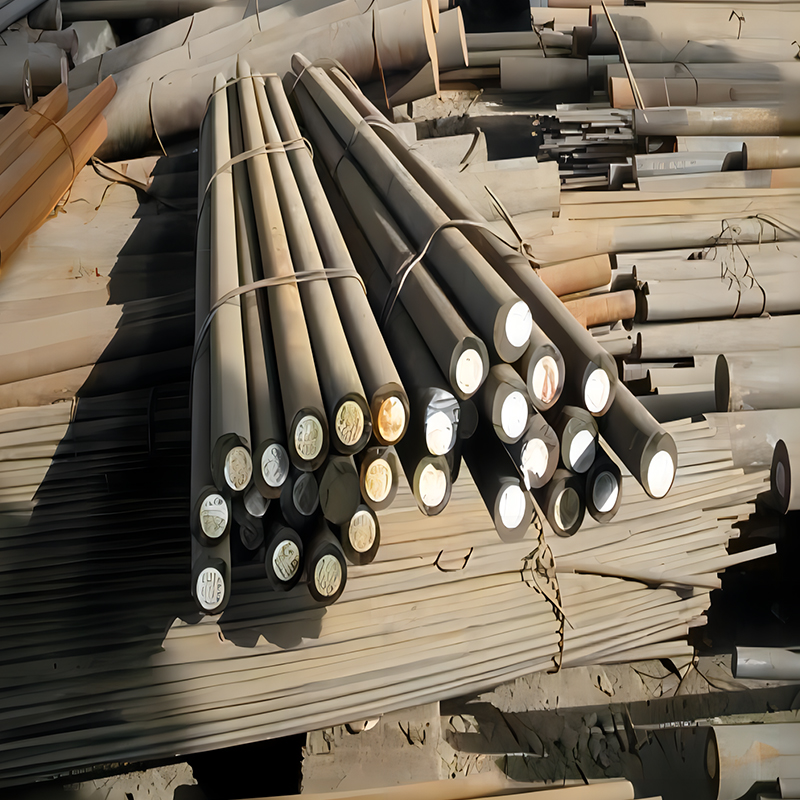
Yield and tensile strength clearly define the physical limits of deformation. Post-quenching and tempering, both alloys exhibit highly impressive strength metrics. Typical yield strength ranges consistently hit between 1200 and 1400 MPa. Final tempering temperatures dictate the exact numbers. Tensile strengths often push well beyond 1400 MPa. The finer grain structure of 50CrV4 gives it a distinct edge in ultimate toughness. You gain significantly more resilience against sudden, high-force impacts.
Comparison Chart: Mechanical Properties Summary (Typical Ranges) | ||
Property Parameter | 55Cr3 Steel | 50CrV4 Steel |
|---|---|---|
Yield Strength (MPa) | 1100 - 1300 | 1200 - 1450 |
Tensile Strength (MPa) | 1300 - 1500 | 1400 - 1650 |
Hardness Range (HRC) | 40 - 47 | 42 - 50 |
Fatigue Limit Margin | Moderate | Exceptional |
High-cycle fatigue resilience separates these two materials dramatically. Dynamic loading subjects mechanical components to millions of continuous stress cycles. 55Cr3 handles standard frequency loads quite well. However, micro-cracks propagate much faster in its coarser microstructure. We clearly frame 50CrV4 as the superior choice for extreme endurance applications. Its refined grains effectively arrest micro-crack propagation at the source. Engineered parts survive millions of cycles longer under identical stress levels.
Temperature stability reveals another critical divergence point. Engineers typically refer to this specific characteristic as sag resistance. Continuous heavy load at elevated temperatures causes physical relaxation. Springs begin sagging over time. 50CrV4 demonstrates excellent resistance to this detrimental phenomenon. It maintains structural integrity at demanding operating temperatures up to 300°C. Identify 55Cr3’s inherent limitations here early in your design phase. It loses elastic limits rapidly in high-heat environments. You should strictly reserve it for standard ambient temperature operations.
Both materials share several essential processing commonalities. They are both classified as oil-quenched and tempered steels. Water quenching is far too aggressive for these grades. It causes immediate thermal shock and severe cracking. Careful physical handling is required to avoid distortion during the rapid cooling phase. Specialized fixturing and precisely controlled cooling rates help maintain critical dimensional stability. Consistent furnace atmospheres are vital for both alloys.
Surface decarburization presents the absolute primary failure risk. High-carbon grades easily lose surface carbon during high-temperature heating. This creates a dangerously weak, soft outer layer. Maximum bending stress occurs precisely at the surface. Therefore, decarburization plummets the effective fatigue limit drastically. Surface finish directly impacts the fatigue limits of both alloys. Controlled atmosphere furnaces are mandatory. Peening or precision grinding post-heat treatment helps mitigate this critical risk entirely.
Machinability and formability differ slightly in their raw annealed states. Before final hardening, you must physically shape the material. 55Cr3 presents minor tooling challenges due to its higher base carbon. 50CrV4 often machines more predictably when it is properly spheroidize-annealed. Tool wear remains generally consistent if the microstructure is well-prepared beforehand. Proper cutting fluid application extends tool life for both materials.
Quality control metrics separate successful deployments from catastrophic system failures. Buyers must demand highly specific standards when evaluating supplier test certificates. Avoid accepting generalized conformity statements. We recommend implementing rigorous verification protocols.
Non-Destructive Testing (NDT): Utilize eddy current or magnetic particle inspection to detect microscopic surface flaws early.
Micro-Cleanliness Evaluation: Demand tests per DIN 50602 or ASTM E45 to ensure extremely low non-metallic inclusion levels.
Decarburization Depth Measurement: Perform strict optical microscopy checks on sectioned samples to verify surface integrity.
Grain Size Verification: Test per ASTM E112 to confirm the Vanadium addition actively refined the microstructure as intended.
Selecting between these alloys requires carefully analyzing your exact mechanical load conditions. You must evaluate frequency, impact force, and operating temperature. Choosing the wrong alloy leads to rapid fatigue failure or unnecessary raw material expenses. A targeted approach ensures maximum engineering value.
When you should confidently specify 55Cr3 Spring Steel:
Standard automotive leaf and coil springs operating under normal road conditions.
Heavy agricultural machinery components like cultivator tines and durable harrow discs.
Cost-sensitive applications featuring highly predictable, lower-frequency load cycles.
Ambient temperature environments where thermal relaxation or sagging is not a primary risk factor.
Static load tension components requiring high baseline yield strength.
When you must strictly specify 50CrV4:
Heavy-duty industrial shock absorbers subjected to extreme, unpredictable physical impacts.
Internal combustion engine valve springs requiring high-frequency oscillation without failure.
Advanced components needing reduced weight or physical mass while maintaining high load capacity.
High-heat manufacturing environments like industrial ovens or performance vehicle braking systems.
Aerospace or defense applications where component failure carries catastrophic operational consequences.
Supply chain availability often varies significantly by region and local manufacturing capability. Understanding global standard equivalents actively aids your procurement flexibility. You will frequently see 50CrV4 referenced accurately as DIN 1.8159 or ASTM 6150. Conversely, 55Cr3 aligns very closely with DIN 1.7176 or ASTM 5155. Cross-referencing these global standards broadens your potential supplier base. It reduces excessive lead times during supply chain disruptions.
You can procure these robust alloys in multiple physical form factors. Availability spans across wire, strip, round bar, and flat bar formats. Mills typically draw wire specifically for heavy coil springs. Flat bars serve traditional leaf spring manufacturing lines. Strip formats expertly feed continuous high-speed stamping operations. Ensure your chosen mill has a proven track record producing your required physical format.
Customization demands incredibly clear communication with producing mills. Guide buyers on specifying custom Spring Steel tolerances accurately. Tight dimensional controls minimize expensive secondary machining operations. Edge conditions like slit, deburred, or fully rounded edges must be specified upfront. Exact delivery states matter immensely to your production floor. Requesting a perfectly spheroidized annealed state dramatically reduces in-house machining time and tool wear.
A proper performance analysis dictates the final material selection. You must determine if prolonged fatigue life justifies a material premium. Evaluate the lifecycle limits of your specific component deeply. If sudden failure causes massive system downtime, the upfront investment in Vanadium-alloyed grades pays off quickly. Standard static loads rarely justify the upgrade. Base your decision purely on expected cycle counts, thermal exposure limits, and failure consequence severity.
In summary, evaluating these two alloys requires a deep understanding of your operational environment. 55Cr3 proves highly capable for standard dynamic loads at ambient temperatures. It serves as an excellent, reliable baseline material. However, 50CrV4 stands as the definitive choice for high-heat, high-cycle, or space-constrained applications. Its refined grain structure and elevated yield strength provide unmatched resilience.
Moving forward, take concrete steps to secure material quality. Always request comprehensive material data sheets (MDS) from your verified suppliers. Verify their micro-cleanliness capabilities before placing bulk mill orders. Finally, consult directly with experienced metallurgists to prototype critical components safely. Proper physical testing ensures your chosen alloy meets every engineering requirement without compromise.
A: Yes, they are highly similar equivalents. ASTM 6150 is the standard American designation, while 50CrV4 follows the European DIN standard (1.8159). Both are premium Chromium-Vanadium spring steels engineered for high-stress applications. Minor allowable regional variations exist in exact chemical tolerance ranges, but engineers generally treat them as interchangeable in most mechanical applications.
A: High-carbon spring steels possess notoriously poor weldability. The high carbon equivalent causes severe embrittlement and immediate cracking in the heat-affected zone. If welding is absolutely unavoidable, you must apply strict pre-heating (around 250°C) and immediate post-weld thermal treatments. This relieves hazardous residual stresses. Mechanical fastening is always strongly preferred over welding.
A: The standard working hardness ranges precisely between 42 and 50 HRC. The specific application requirements dictate the target. The chosen tempering temperature strictly controls the final hardness-to-toughness ratio. Lower tempering temperatures yield much higher hardness but reduced ductility. Higher temperatures increase toughness and shock resistance while slightly sacrificing ultimate tensile strength.


