
Views: 0 Author: Site Editor Publish Time: 2025-11-28 Origin: Site


When it comes to manufacturing steel components, two common methods that are often considered are forging and casting. Each process has its unique benefits and limitations, making the choice between the two depend on a variety of factors such as material properties, production requirements, and cost considerations. Understanding the differences between forging and casting is crucial for selecting the right method for producing high-quality steel parts for various industrial applications.
At www.unionalloysteel.com, we specialize in providing top-quality forged and cast steel products, offering expertise in both manufacturing techniques. In this article, we’ll explore the differences between forging and casting in the context of steel manufacturing, outlining their respective advantages and disadvantages. This will help you determine which process is the best for your needs.
Forging is a manufacturing process where metal is shaped by applying compressive force. The steel is heated to a high temperature (often above its recrystallization point) and then shaped using tools such as hammers, presses, or dies. This process results in a strong, durable steel product with improved mechanical properties.
Forging can be done using various methods, including open-die forging (where the material is shaped between flat dies) and closed-die forging (where the material is placed in a die cavity and shaped under pressure).
Key Benefits of Forging Steel:
Superior Strength and Durability: One of the biggest advantages of forging is the creation of steel parts with excellent mechanical properties. The grain structure of the steel is aligned with the direction of the force applied, resulting in improved strength, toughness, and fatigue resistance. This makes forged steel parts ideal for applications that require high strength and durability, such as automotive components, aerospace parts, and heavy machinery.
Material Integrity: Since forging involves compressing and shaping solid steel, it reduces the likelihood of internal defects like porosity or voids. This leads to a higher-quality steel component with improved consistency and reliability.
Reduced Need for Additional Processing: Forged steel components generally require less post-production processing than cast parts. The forging process naturally eliminates many defects that might require additional treatment or machining.
High Precision and Repeatability: Modern forging techniques, particularly closed-die forging, can produce parts with very tight tolerances. This is particularly beneficial in industries where precision is critical.
Casting is a widely used method in steel manufacturing, where steel is melted down and poured into a mold to form components. This process involves shaping the molten steel by pouring it into a mold cavity, where it solidifies to take the shape of the mold. One of the greatest advantages of casting is its ability to produce complex shapes and intricate designs that would be difficult or impossible to achieve through other methods, such as forging.
There are several different casting processes used in manufacturing, including sand casting, investment casting, and die casting. Each of these methods has specific advantages depending on the type of steel part being produced and the volume of production. These processes are widely used across industries like automotive manufacturing, heavy machinery, and construction, where components need to be produced with complex geometries or in large volumes.
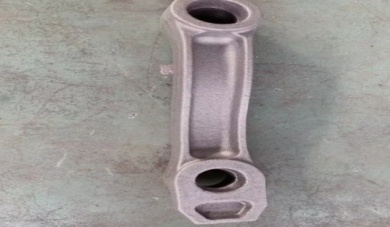
Casting steel offers several distinct advantages that make it an attractive option for manufacturers. Below are some of the key benefits of using casting in steel production:
Casting excels at producing parts with complex geometries that are difficult or impossible to achieve through other manufacturing processes like forging. Unlike forging, which involves shaping the material through force, casting allows for more intricate designs and detailed features, such as:
Thin walls: Thin-walled components can be created in casting processes like investment casting.
Undercuts: Complex internal features such as undercuts or cavities are easier to achieve in casting.
Hollow sections: Casting allows for the creation of hollow components, such as pipes or engine blocks, without the need for welding or joining parts.
This versatility in design makes casting ideal for producing components like engine blocks, piping systems, fittings, and large industrial parts that require specialized internal structures.
Casting is often the most cost-effective process for producing large steel components. Compared to forging, where significant force is required to shape thick metal, casting allows for the creation of large components at a fraction of the cost. This is because:
Reusable molds: In casting, molds are often reusable, and once the initial mold is created, it can be used to produce multiple parts, reducing the overall cost for high-volume production.
Less material waste: Casting typically uses more material efficiently, especially when compared to machining methods where a lot of material may be cut away.
For large, bulky steel components, such as heavy machinery parts or industrial equipment, casting can often be more cost-effective than other processes like forging or machining.
Casting is a highly versatile method for working with a range of steel alloys and other metals. It can be used with various types of steel, including:
High-carbon steel: Casting allows for the production of high-carbon steels, which are often used for making tough, wear-resistant components.
Low-alloy steel: Casting is often the preferred method for producing low-alloy steels used in structural applications.
Stainless steel: Steel casting is particularly advantageous for producing stainless steel components, where precision and consistency are critical.
In addition to steel alloys, casting can be applied to metals that are more difficult to forge due to their inherent properties. For instance, materials with low ductility or high melting points can often be more easily processed through casting rather than forging.
One of the main advantages of casting, especially in comparison to other methods like machining, is the reduction of material waste. In casting, the steel is melted and poured into molds designed to utilize the material more efficiently. Once the molten metal is poured into the mold, it solidifies in the shape of the desired part, with minimal material wastage.
In sand casting, the excess material around the mold cavity can be re-melted and reused, further reducing waste.
Investment casting also uses a similar principle where the pattern is melted away and the remaining material is reused to cast new parts.
The ability to recycle materials during the casting process helps make it more environmentally friendly compared to methods that require significant amounts of material removal, such as machining.
Forging: As mentioned earlier, forged steel typically has superior mechanical properties due to its refined grain structure and uniformity. This makes forging ideal for high-stress applications such as aerospace components, automotive parts, and heavy machinery.
Casting: While casting can produce parts with excellent strength, the final product generally doesn't match the mechanical properties of forged steel. Castings are more prone to defects like porosity and shrinkage, which can affect their strength and durability. However, the use of high-quality molds and controlled cooling processes can help mitigate these issues.
Winner: Forging typically provides superior strength and durability, making it the better option for applications that require high performance under stress.
Forging: Forging is generally limited to simpler shapes, especially with open-die forging. Although closed-die forging allows for more complex designs, it still has some limitations compared to casting when it comes to intricate shapes or internal features.
Casting: Casting is particularly advantageous for creating complex shapes, including parts with intricate internal structures. Molds can be designed to achieve highly detailed and complicated geometries, which makes casting ideal for applications such as industrial pumps, engine blocks, and fittings.
Winner: Casting excels in producing complex shapes and intricate designs that would be difficult or impossible to achieve through forging.
Both forging and casting are highly valuable methods of steel manufacturing, each with its own strengths. The right choice depends on the specific requirements of your application:
Forging: is ideal for parts that require superior strength, durability, and reliability under high stress, such as aerospace components, automotive parts, and heavy machinery.
Casting: is a better option when you need to create complex shapes or large parts at a lower cost, or when your application does not require the same level of mechanical performance as a forged part.
At www.unionalloysteel.com, we specialize in high-quality forged and cast steel products designed for a wide range of industrial applications. Whether you need parts that are strong, precise, and reliable, or components with complex geometries and lower production costs, we offer tailored solutions to meet your needs. If you are looking for expert advice on which process is right for your manufacturing needs or need assistance with custom forging or casting solutions, feel free to reach out to us. We're here to help you make the best decision for your steel manufacturing requirements.
